Sep 24 – Nov 11 · EN-01 – EN-89
Wood robot
Our first robot: a 1/4 in plywood frame we cut on our laser cutter, with 3D-printed PLA parts. The plan was to pick up both ball sizes, sort them by size, and shoot each with its own hood shooter.
- Sep–Oct, two shooters: we split plates to fit the laser, fixed the drive chain, found by video that the pollen shooter wasn't squeezing the ball, and bench tested a size sorter (Pollen 5/5 into the slot). The pollen shooter v4 was built and bench tested.
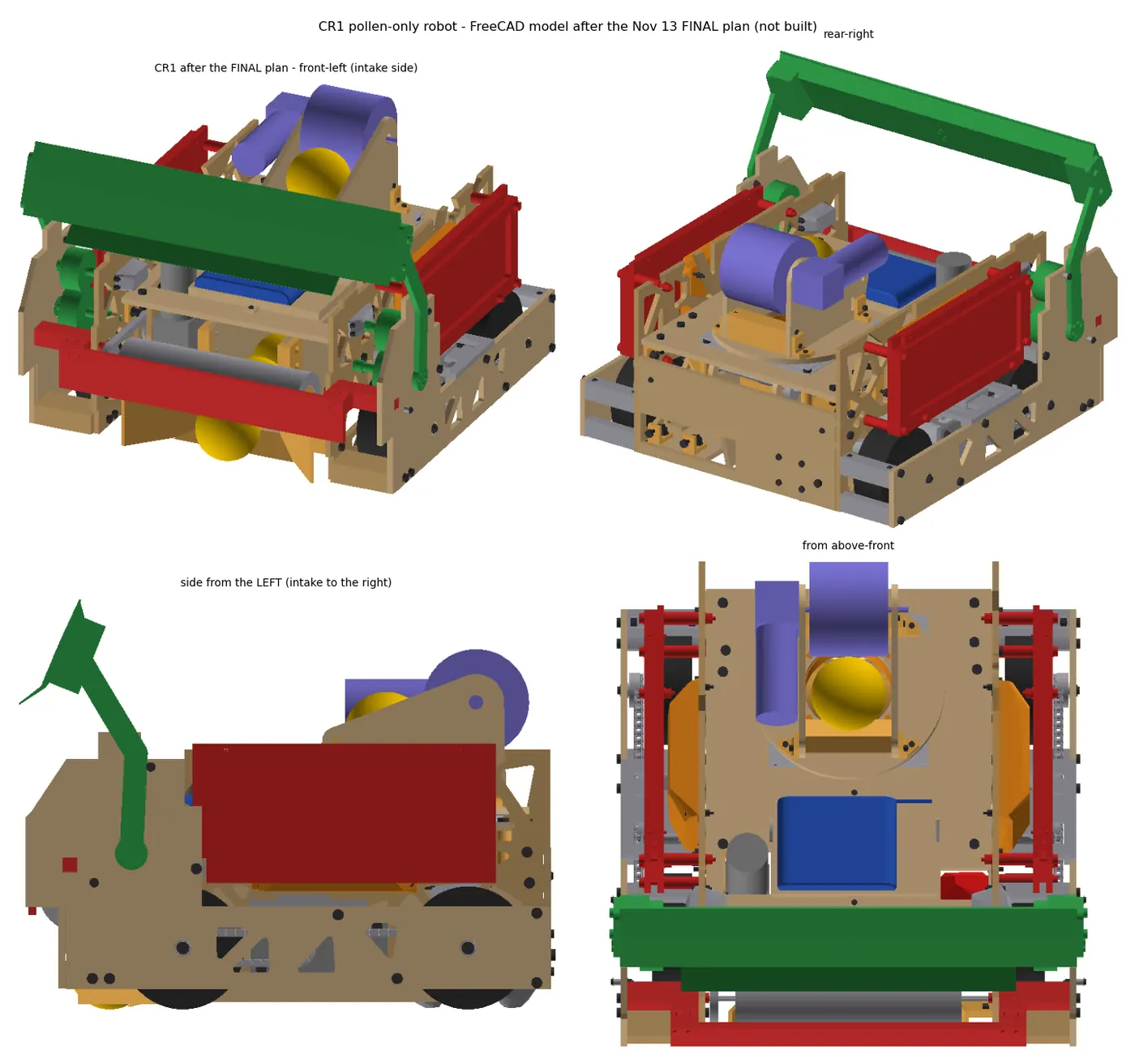
- Nov 1–10, Pollen only: we had no reliable way to feed Nectar, so we chose a Pollen-only robot for the qualifier (EN-59), added a flower wedge, and stiffened the drive pods.
Why we moved on: in class footage, the shots that reached the hive bounced back out (3 of 3 we could follow). The hood shooter gives the ball backspin. EN-74
All 88 entries in this version
01 02 03 04 05 06 07 08 09 10 11 12 13 14 15 16 17 18 19 20 21 22 23 24 25 26 27 28 29 30 31 32 33 34 35 36 37 38 39 40 41 42 43 44 45 46 47 48 49 50 51 52 53 54 55 56 57 58 59 60 61 62 63 64 65 66 67 68 69 70 71 72 73 74 75 76 77 78 79 80 81 82 83 84 85 86 88 89
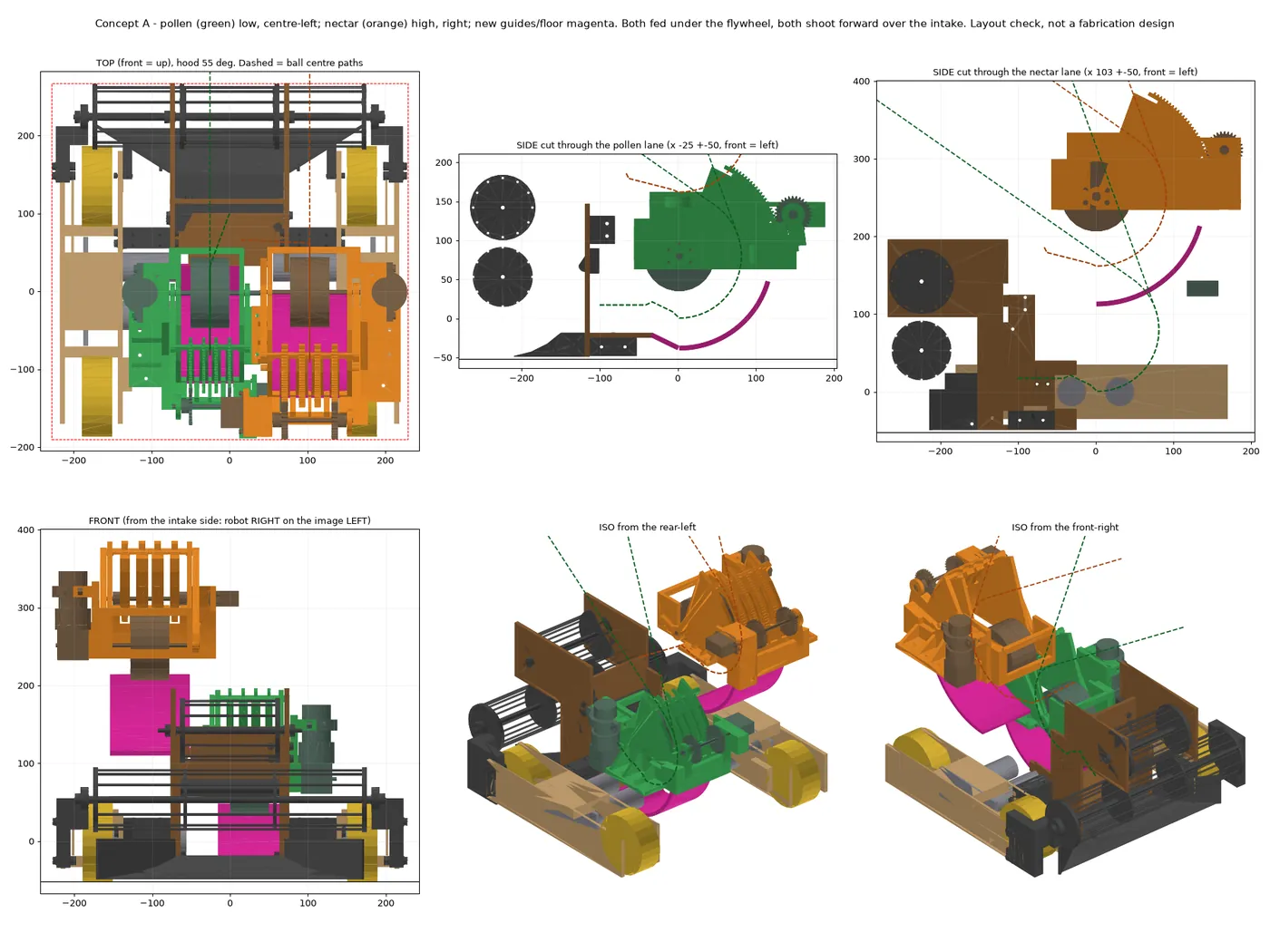
Nov 11 – 16 · EN-90 – EN-103
CR1
CR1 ("concept robot 1") is a new robot built around a topspin shooter: the wheel is on top of the ball and a grippy ramp is under it, so the ball spins forward and rolls into the hive instead of bouncing out. Another FTC team had found the same thing while prototyping.
- We kept the drivetrain, odometry, hubs and wedge, and added a turret (a lazy susan turned by two servos, ±90°), a 4-ball lane and a transfer that squeezes the ball up into the head.
- Before building the robot, we drew test rigs for each new part: the shooter head, the turret, the front module and the wedge.
- The topspin head on the turret rig shot much more consistently, so we made it one printed piece. EN-102
All 14 entries in this version
Nov 16 – 19 · EN-104 – EN-110
CR1 v6
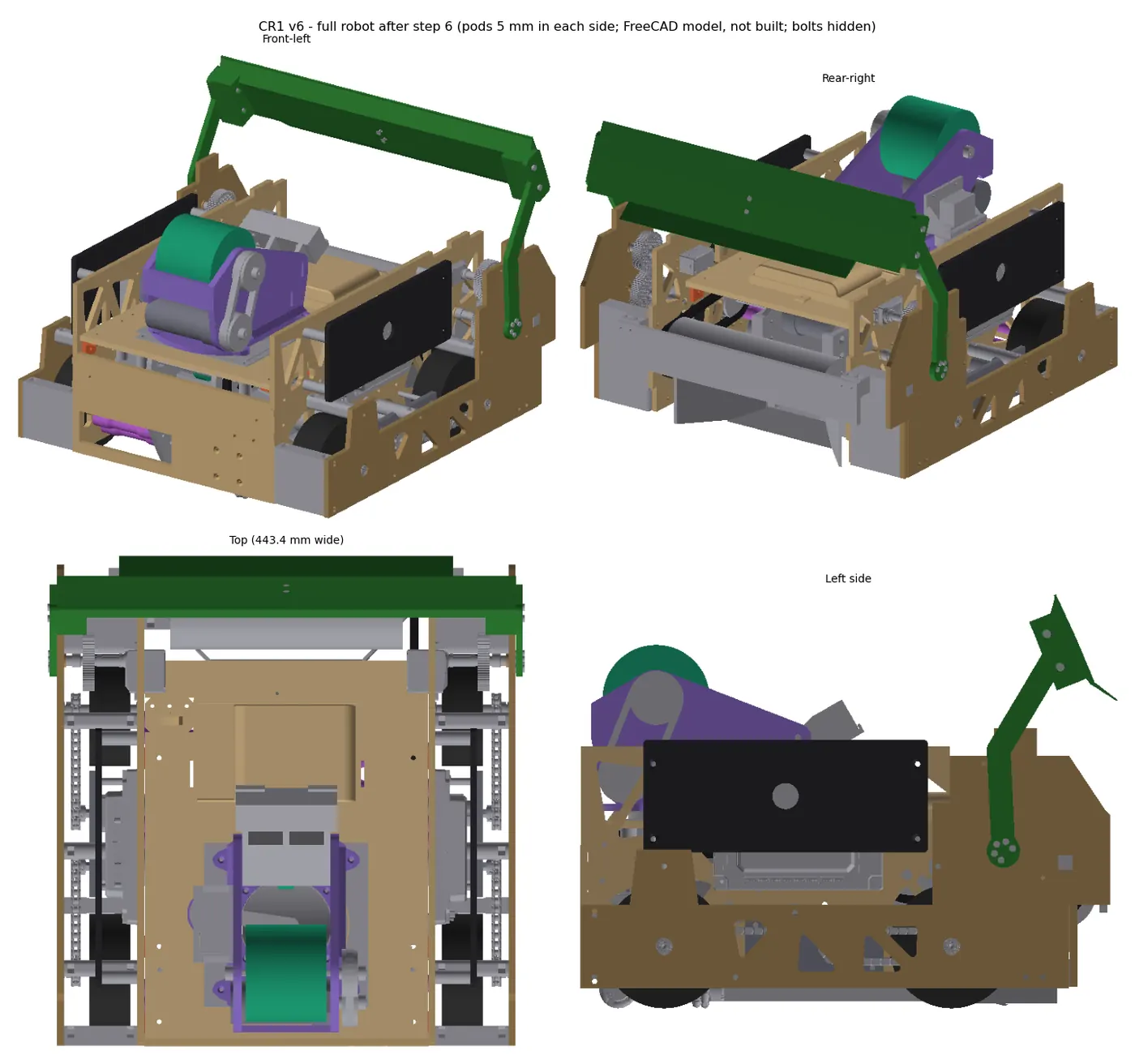
CR1 v6 is the clean-up of CR1 in six planned steps. The goal: fewer parts, parts that fit our machines, and room to spare inside the 18 in box.
- One bracket shape instead of four; one printed sign instead of 16 parts; one idler on the transfer chain instead of three.
- Full-length side plates cut in one piece on a bigger laser (Glowforge).
- The robot had only 0.35 mm to spare on each side. We moved the pods 5 mm in for 0.25 in of margin. EN-108
- We tried putting the wedge arms inside the pods so other robots can't break them, but chose to keep them outside. EN-109
All 7 entries in this version
Nov 19 – now · EN-111 – EN-115
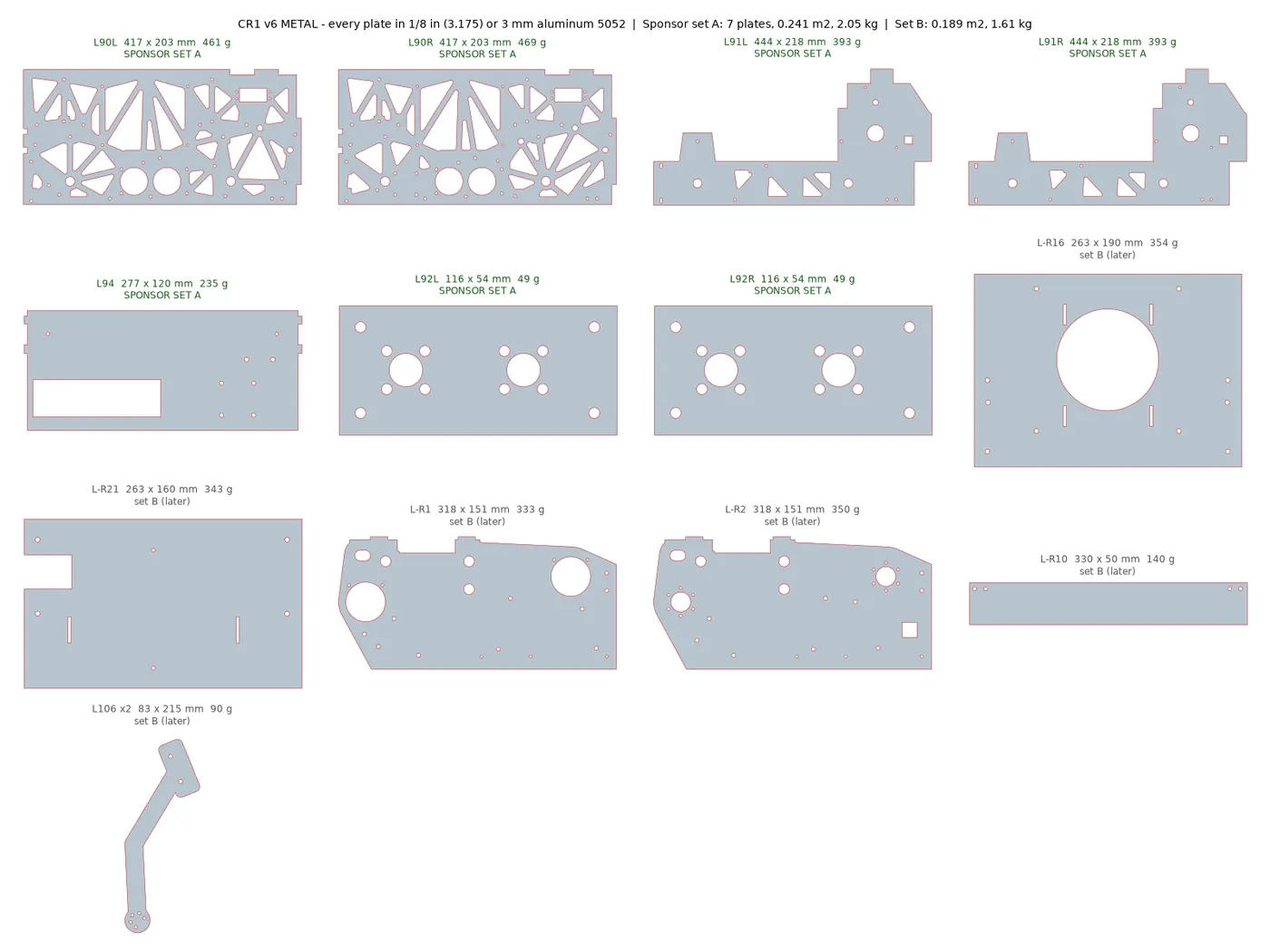
v6 METAL
A sponsor gave us a $500 credit for metal parts. v6 METAL is the same robot with its 7 most important plates in 1/8 in aluminum: the side plates that hold the wheels, the drive motor plates and the rear panel.
- Every plate keeps the face that sets where parts go, so no wheel, chain, motor or turret moves. Printed parts grow 3.2 mm to fill the space. EN-111
- The lane became two 3D prints instead of 7 parts, with 3 small extra wheels so a ball never sits still. EN-112 · EN-113
- The camera moved to the top of the head so the wedge never blocks its view, and we are testing a lower wedge for the flower. EN-114 · EN-115
Status: Files ready The whole robot is designed and checked in CAD. Next: cut, print, build and test before the qualifier on December 20.